
Skip to content
Android · Coming soon to Google Play Early AccessFAQPT
IronWave Play before launch
Lore

The history of the world

From the first lighthouse lit in the cove to the cape where the charts run out.

I

The first lighthouse

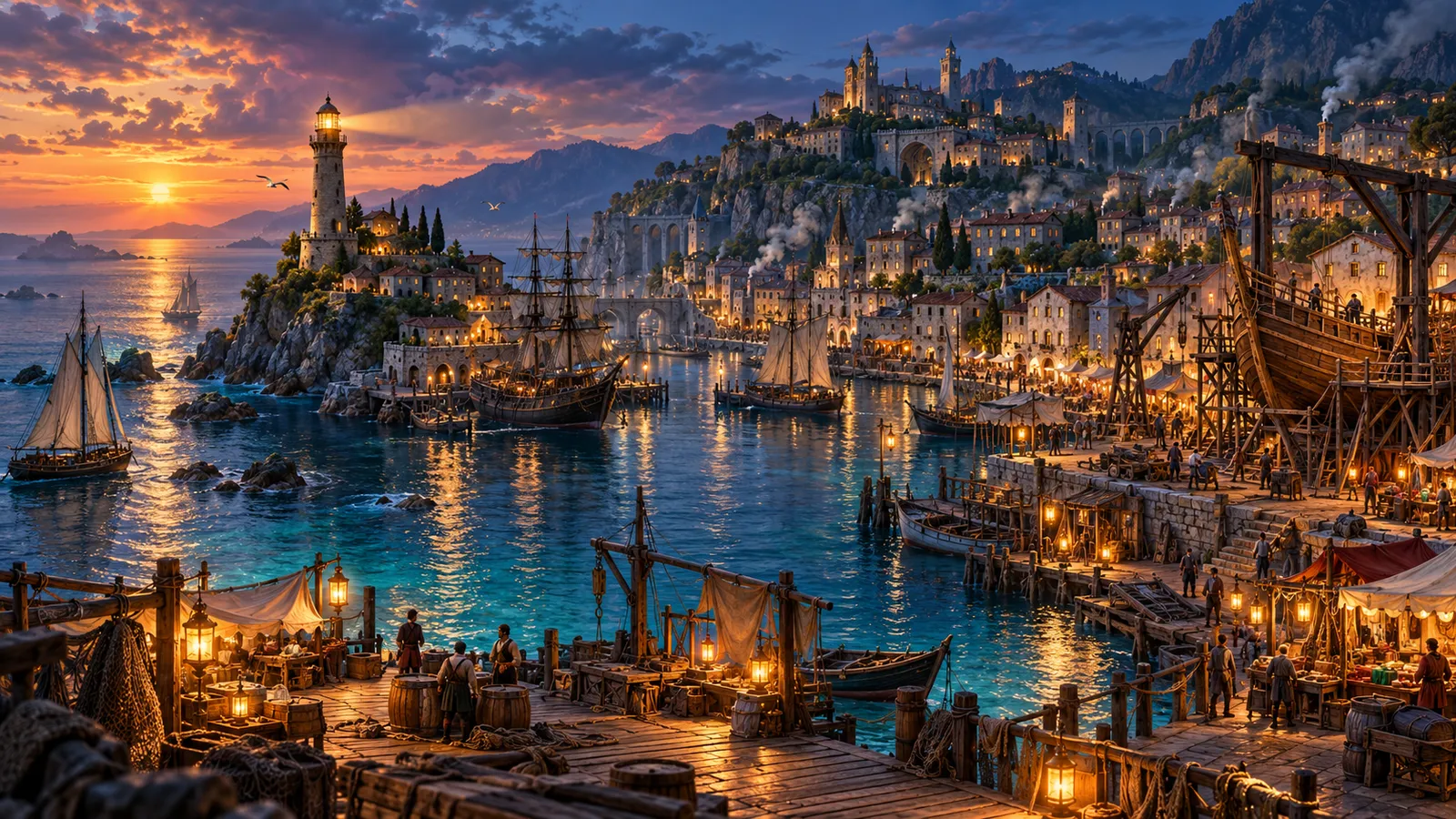
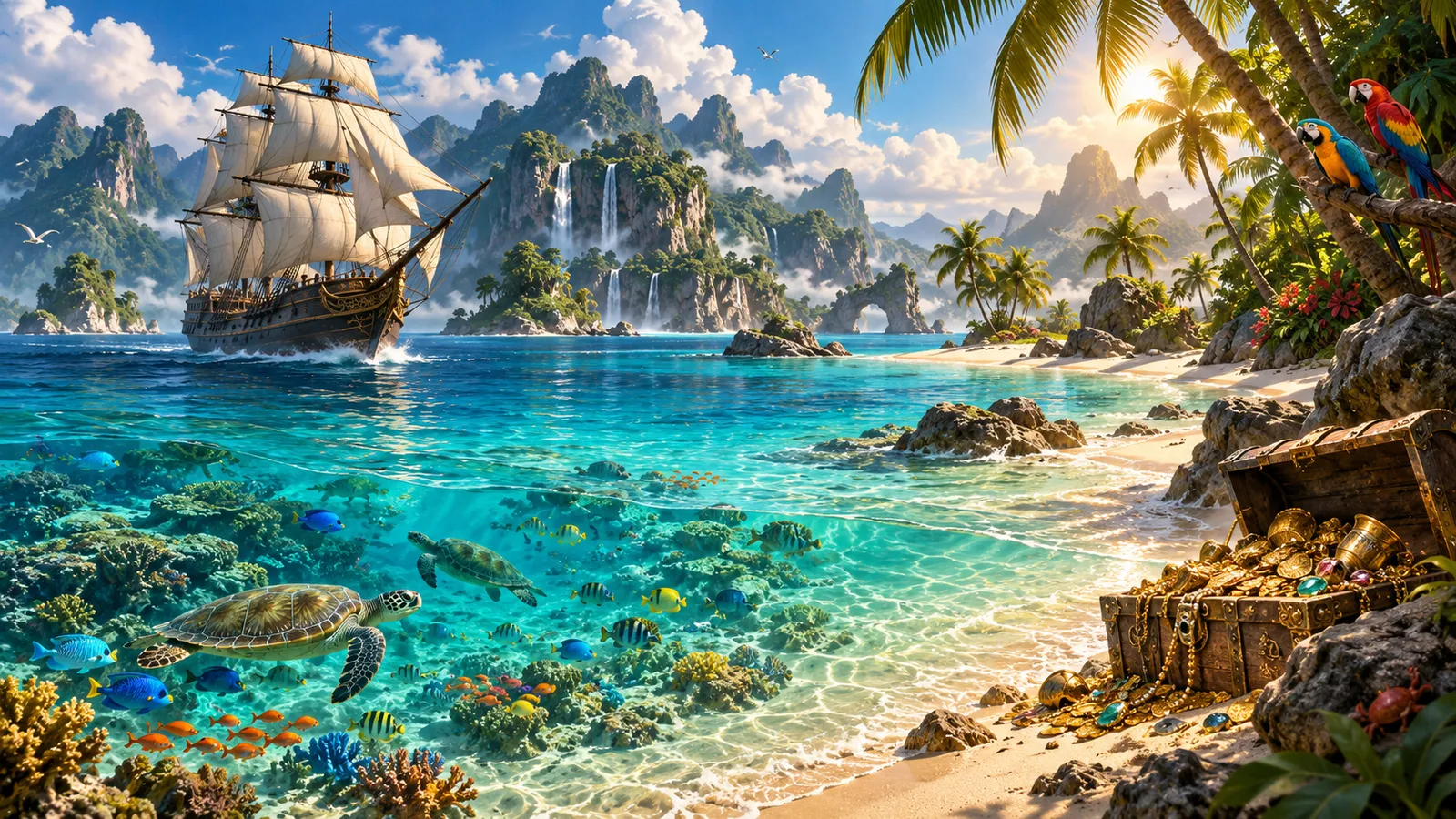
Ask any old hand on the quay and they all start in the same place: before the charts, the sea had no end. The only thing in the world that stayed put was a light: the lighthouse out at Enseada do Farol. Someone lit it on a stormy night so a single boat could find its way home. The boat made it. And whoever was aboard never let that fire go out again.

That is why every captain starts there. The cove is calm and the targets never stray far. Nobody leaves without knowing how to aim, repair and dock. When the way out opens, it is one way only: on the other side lies Baía das Salinas, with Porto da Lanterna, and from there on it is the whole sea.
II

The passages

The first ones who tried to cross the world in a straight line came back without sails. Some never came back. Those who made it far learned something else: the seas do not join just anywhere. They join at the passages, straits with the right current, where the water itself carries a ship from one sea to the next.

The custom has not changed. In every harbor the boatswain keeps that sea's quests, and the last one always points to the next passage. Follow that thread and you cross the world. Stray from it and you will soon learn why the old hands never sail alone.

III

What sleeps in the deep

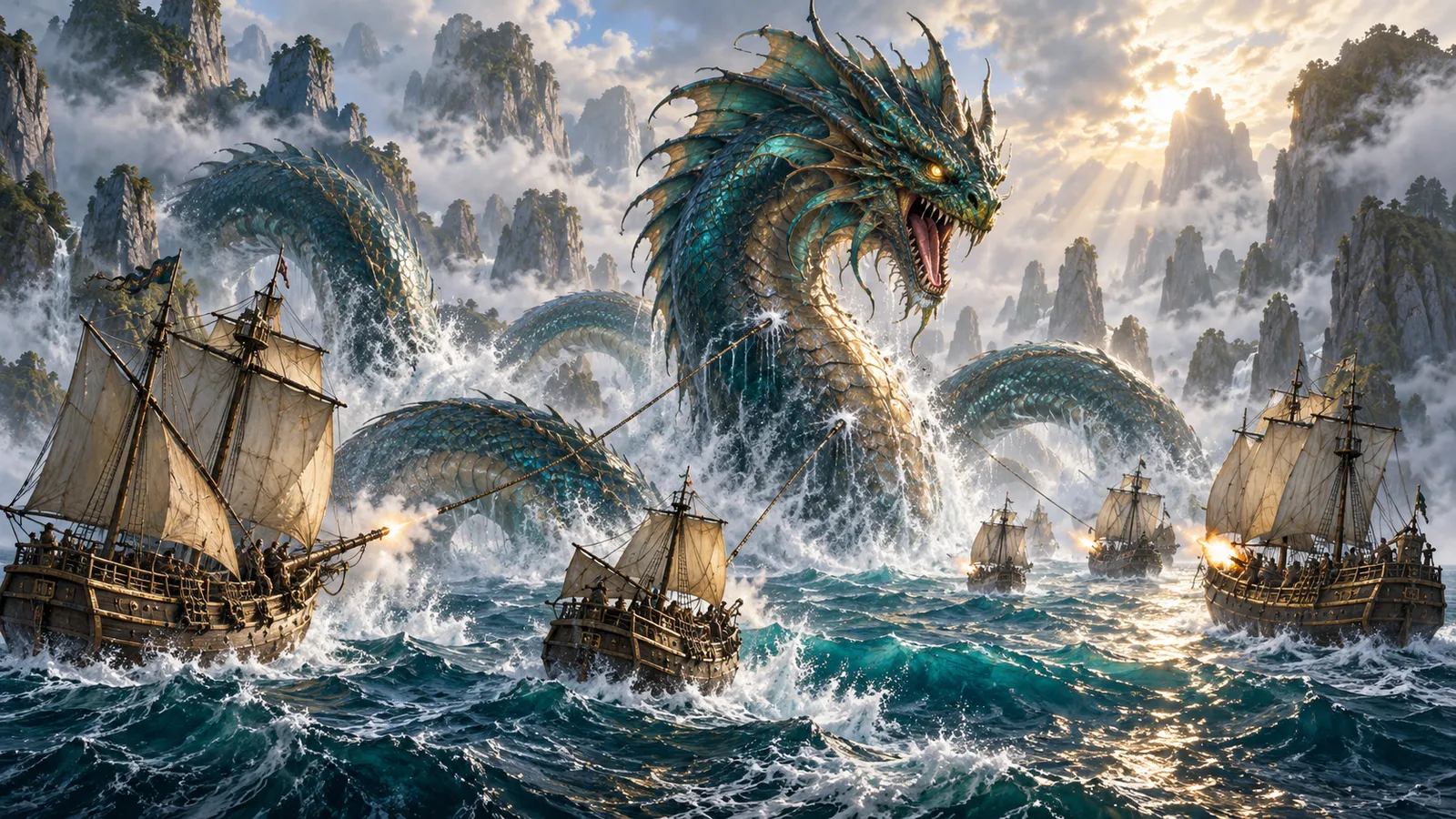
The sea has two kinds of enemy, and plenty of captains paid dearly to learn the difference. Ships sink to shot. Creatures do not: scale, shell and armor shrug off round iron like rain on a roof. The answer came from the whalers, and it was the harpoon. Ever since, any ship worth the name carries both: cannon for what sails, harpoon for what swims.

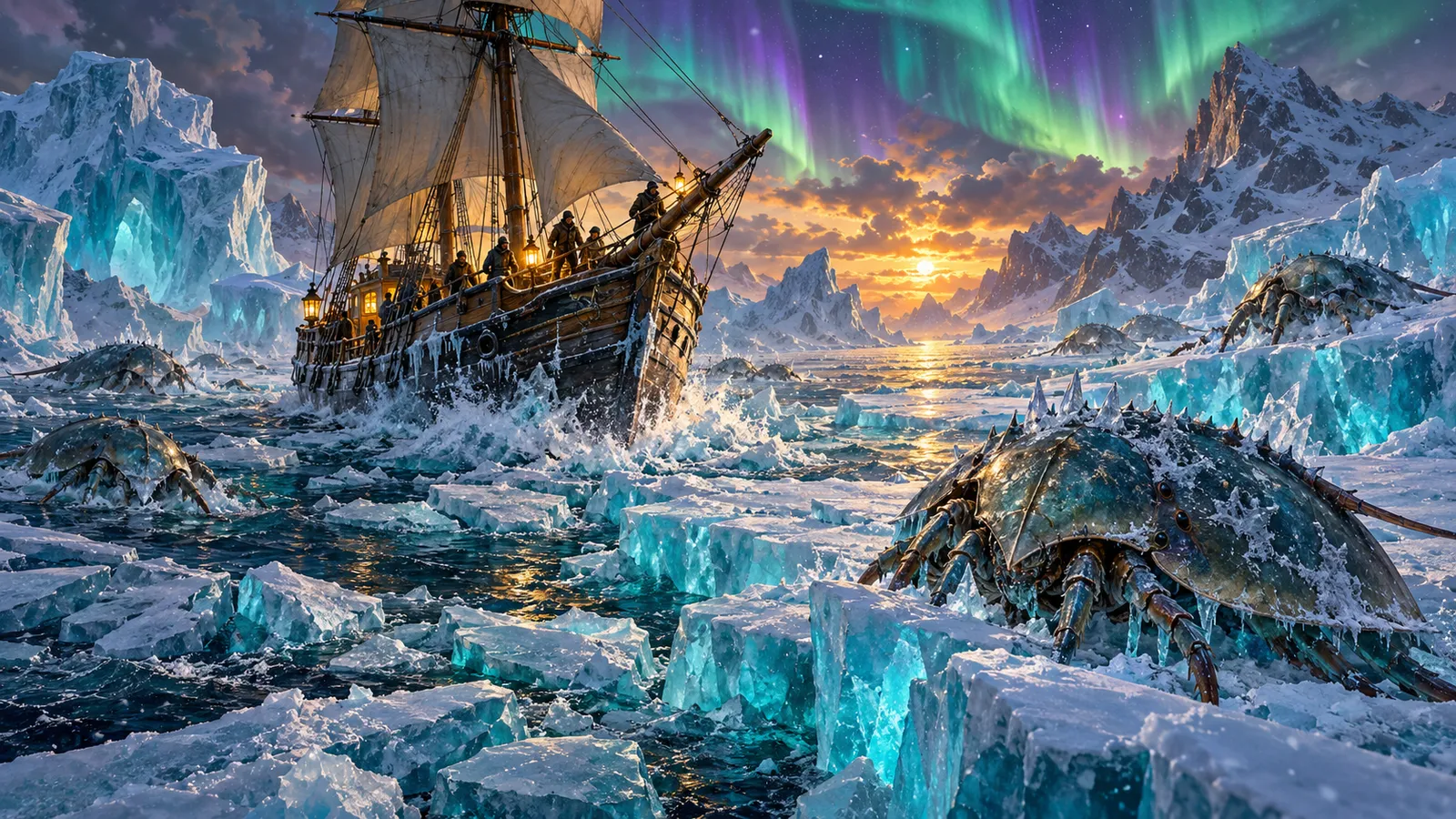
Some creatures grew too big for a single harpoon. The Serpente das Brumas coils in the mist that rises off the ice floes. The Tartaruga-de-Basalto sleeps among the stone needles and, from afar, passes for one more rock. They are why the harbors invented the group: five captains, the loot split evenly, and nobody firing on a shipmate.

IV

Where the law ends

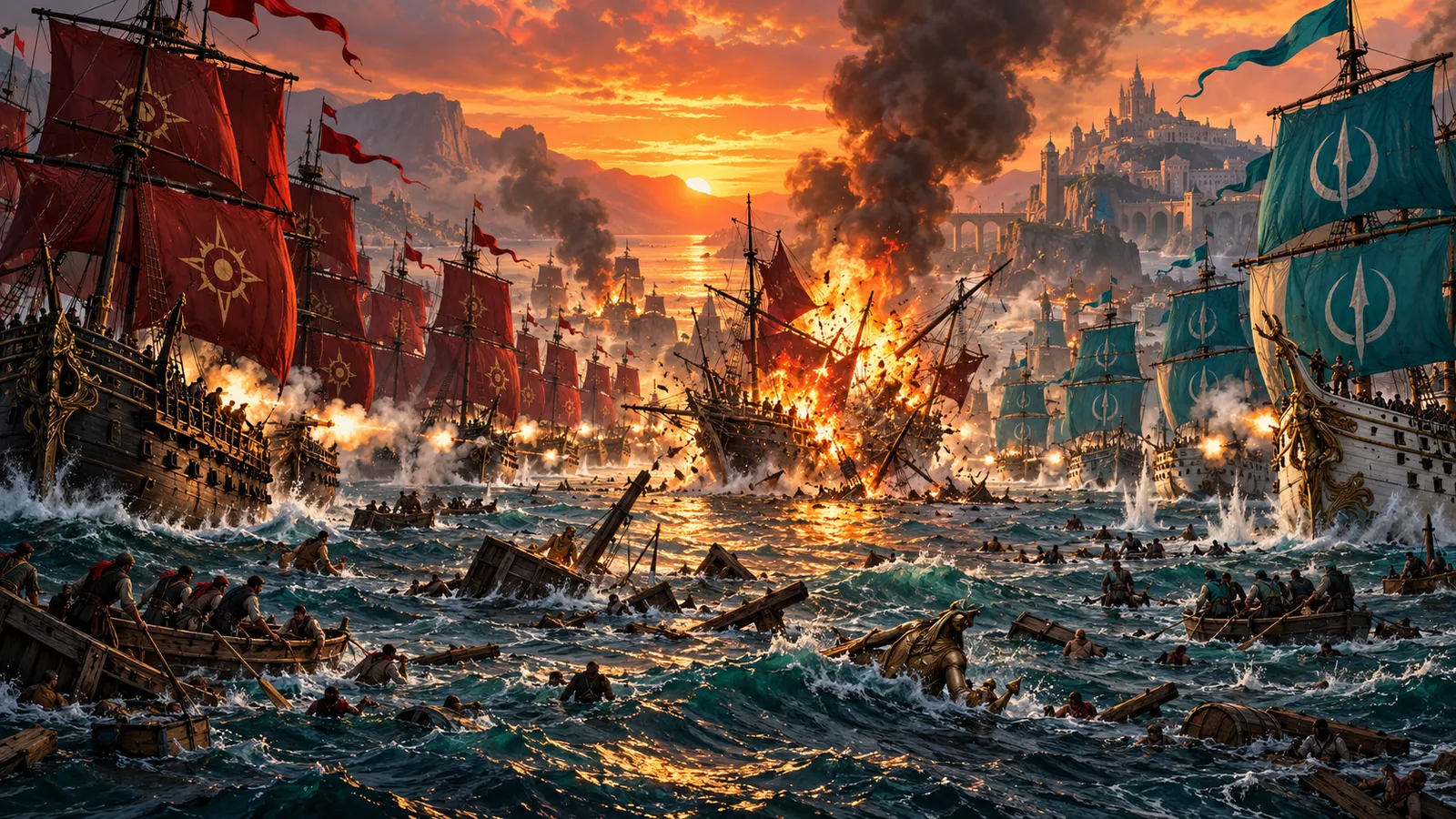
Near the coast the harbors still call the shots. But their word grows weaker with every mile, and from Baía do Farelhão on it counts for nothing: out there, captain hunts captain. Whoever comes back keeps the skulls of those they sank. Skulls became money, the only kind you cannot buy.

Guilds were born in those waters. Crews sworn to the same banner bought islands, raised fortresses and towers, and learned to lay siege to each other's islands, arriving through the whirlpools. A fallen fortress pays no gold. It pays fame, and fame is what a guild lives on.

V

The end of the map

In the far east the world splits into two roads. One is green and long, all palm groves and lagoons. The other is ice, short and cruel. Both end in the same place, Cabo da Aurora, and past it there is no chart at all. At Muralha do Leste, fishermen swear there is no more sea behind the cliff. Only the wall.

On the cape lives the largest ship this sea has ever seen, the Titã da Aurora: a five-masted ship of the line, black iron sides crusted with ice and the aurora burning inside its sails. No hull can take its broadside alone. Whoever brings it down reaches the end of the sea, and finds that out there, fame is only getting started.